
Article: Sumi to Yuki: Handmade Japanese Pottery from the Clay Behind Koushin Kiln
Sumi to Yuki: Handmade Japanese Pottery from the Clay Behind Koushin Kiln
There's a small kiln in Fukuchi, Fukuoka, where the potters never buy their clay. They dig it themselves from the hillside directly behind the workshop, then refine it into something they can work with.

The Land Itself Is the Clay
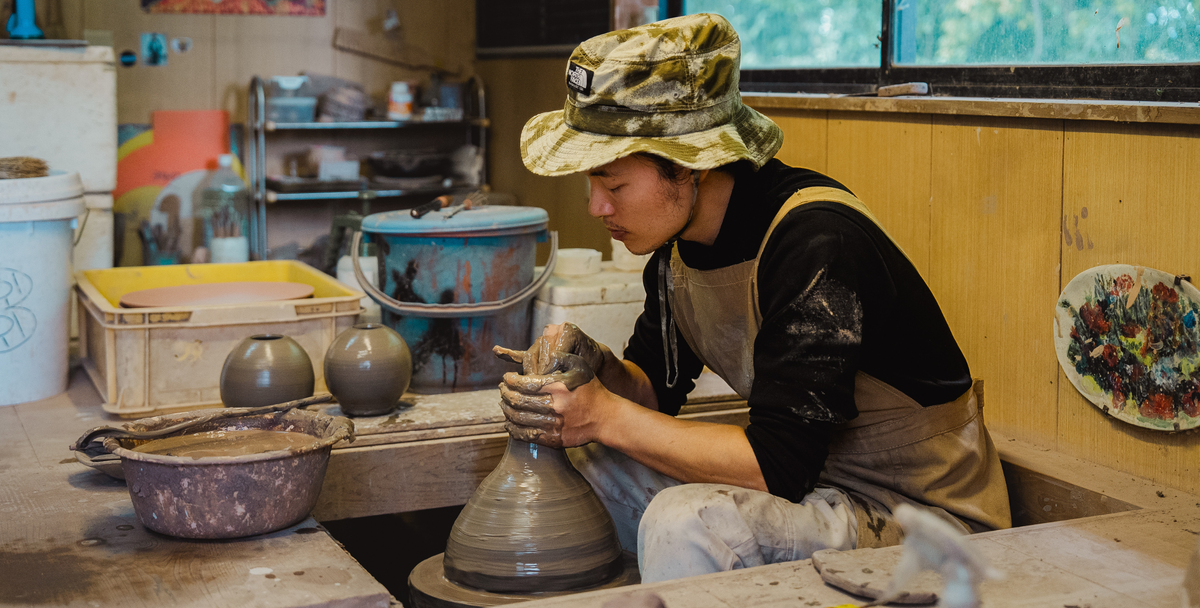
The Agano-ware line IKEHIKO carries, Sumi to Yuki (墨と雪, "ink and snow"), is made at Koushin Kiln (庚申窯) in Fukuchi by potter Kozuru Yuta. As the opening line said, the clay is dug from the hillside directly behind the workshop, then refined through "suihi" a water-elutriation process that isolates only the finest particles for the clay body. Not sourced clay, but clay that only exists in that one place that's what sets Koushin Kiln's ware apart from other kilns.

Three Generations at Koushin Kiln
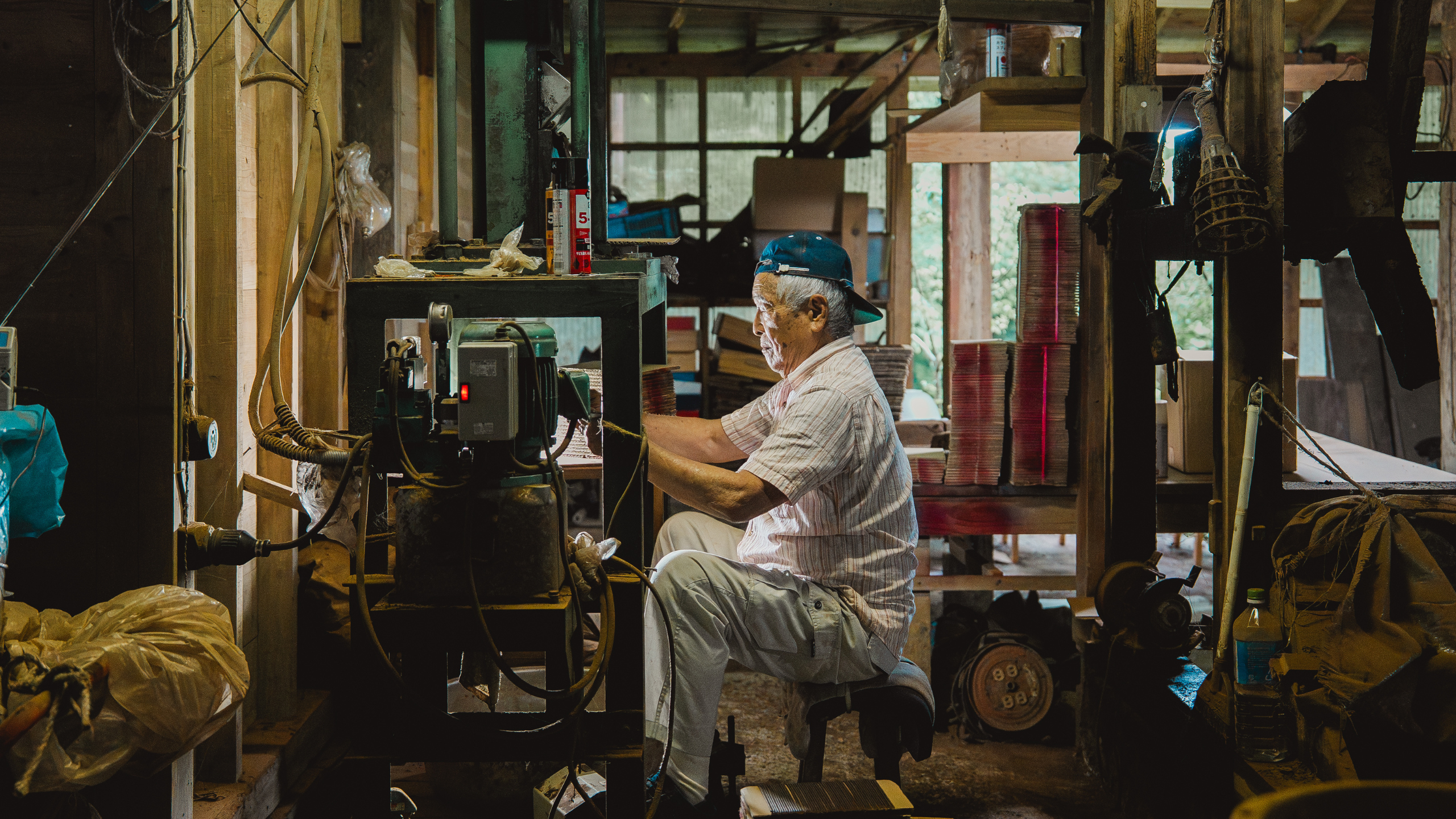
Koushin Kiln was founded in 1971, when Kozuru Chizan built it at age 39. The Kozuru family has been part of Agano-yaki since its Meiji-era revival. This kiln's own history is only half a century old, but the family's connection to the craft goes back further still. Today the kiln is run by second-generation potter Kyoichi and his son, third-generation potter Yuta.
Sumi to Yuki: Ink Flowing Over Snow
The Sumi to Yuki name and the brand itself is Yuta's own creation within Koushin Kiln. It describes exactly what you see: a dark, ink-like glaze running down over a snow-white body. Because the glaze is applied entirely by hand, one piece at a time, no two pieces ever come out with quite the same flow or expression.

A Brief History of Agano-Yaki Pottery
Agano-yaki pottery dates back to 1602, when feudal lord Hosokawa Tadaoki invited a Korean-born potter to open the original kiln. It grew into a tea-ceremony craft good enough to be named one of the "Enshu Nana Gama," the Seven Kilns favored by 17th-century tea master Kobori Enshu. The craft nearly disappeared after the Meiji Restoration, was revived in 1902, and was officially designated a Japanese Traditional Craft in 1983, roughly 420 years of history, with one near-break in the middle.
Thrown Thin, the way Tea masters Liked It
Because Agano-yaki grew up as a tea-ceremony craft, its potters have always favored thin, light forms. That lightness is part of what makes a piece so pleasant to use every day. It's also worth being upfront about: thinner pottery is generally more fragile than a heavier piece. Which is exactly why how something is packaged matters so much for anything shipped overseas. Each order is carefully packed for the trip from Fukuoka, and ships with duties and taxes already included, free of charge, anywhere in the world.
Sumi to Yuki - Ceramic Incense Holder Plate

Where Agano-Yaki turns up today
Agano-yaki is still made for tea ceremony and everyday use, not just as an antique. Agano ware is used in the interiors of The Ritz-Carlton Fukuoka. Koushin Kiln itself has been featured in magazines and on national television and exhibited at the 2023 Tableware Festival.
Why IKEHIKO Carries Agano-Yaki
IKEHIKO was founded in 1886 as a tatami merchant house and has manufactured igusa products in Kyushu since the 1960s. The igusa we use comes from Yatsushiro, Kumamoto; Koushin Kiln's clay comes from the hill directly behind the workshop. Both rest on the same idea let the land's own material do the work, unaltered. When we thought about bringing Kyushu craftsmanship to customers beyond tatami and igusa, Koushin Kiln's Sumi to Yuki line was one of the most natural choices we could make. We wanted to bring the one-of-a-kind character that only comes from Yuta's handwork into everyday life, which is why we added it to our collection.
Bring a Piece of Sumi to Yuki Home
Right now, IKEHIKO carries two pieces from the Sumi to Yuki line — both available to buy directly from our online store:
-
Shop the incense plate →
Doubles as an incense holder and a small decorative tray. The contrast of black glaze and white clay works equally well in a Japanese-style room or a Scandinavian-inspired interior.
-
Shop the ceramic flower vase →
Palm-sized, thin-walled, and lighter than it looks. Perfect for a single stem or a few branches.
No two pieces are ever exactly alike, so the one you choose becomes genuinely, uniquely yours. Both are hand-finished, one at a time, at Koushin Kiln — and because of that, each is made in limited numbers.

FAQ
What does "Sumi to Yuki" mean?
It's Japanese for "ink and snow", describing the dark glaze that flows over the snow-white clay body.
Is every piece really different?
Yes. Because the glaze is applied by hand, the exact pattern of each piece varies. The one you receive may look slightly different from the one shown in photos.
How do I care for it?
Wipe with a dry cloth after use. Avoid sudden temperature changes and hard knocks, which can crack or chip the piece. Because it's handmade pottery, please don't use it in the microwave or dishwasher.
Isn't thin pottery risky to ship overseas?
Thinner pottery is more delicate than a heavier piece, which is exactly why each order is carefully packed with Bubble wrap and double boxing for the trip. Shipping is free worldwide, with duties and taxes already included in the price.
How is Agano-yaki different from other Japanese pottery?
It lets the glaze itself, rather than painted decoration, do the talking. Heat and flame movement inside the kiln change how the same glaze looks from piece to piece.