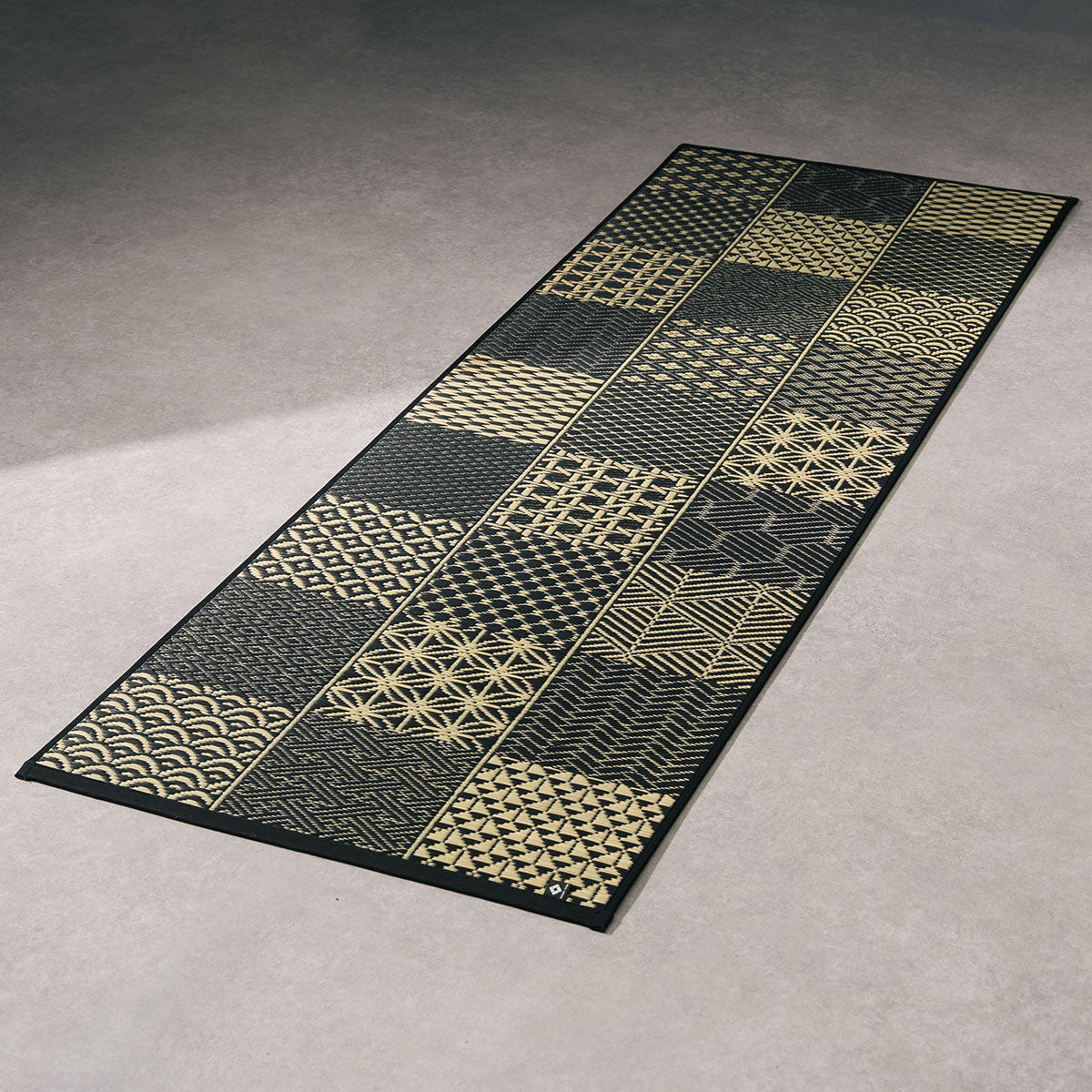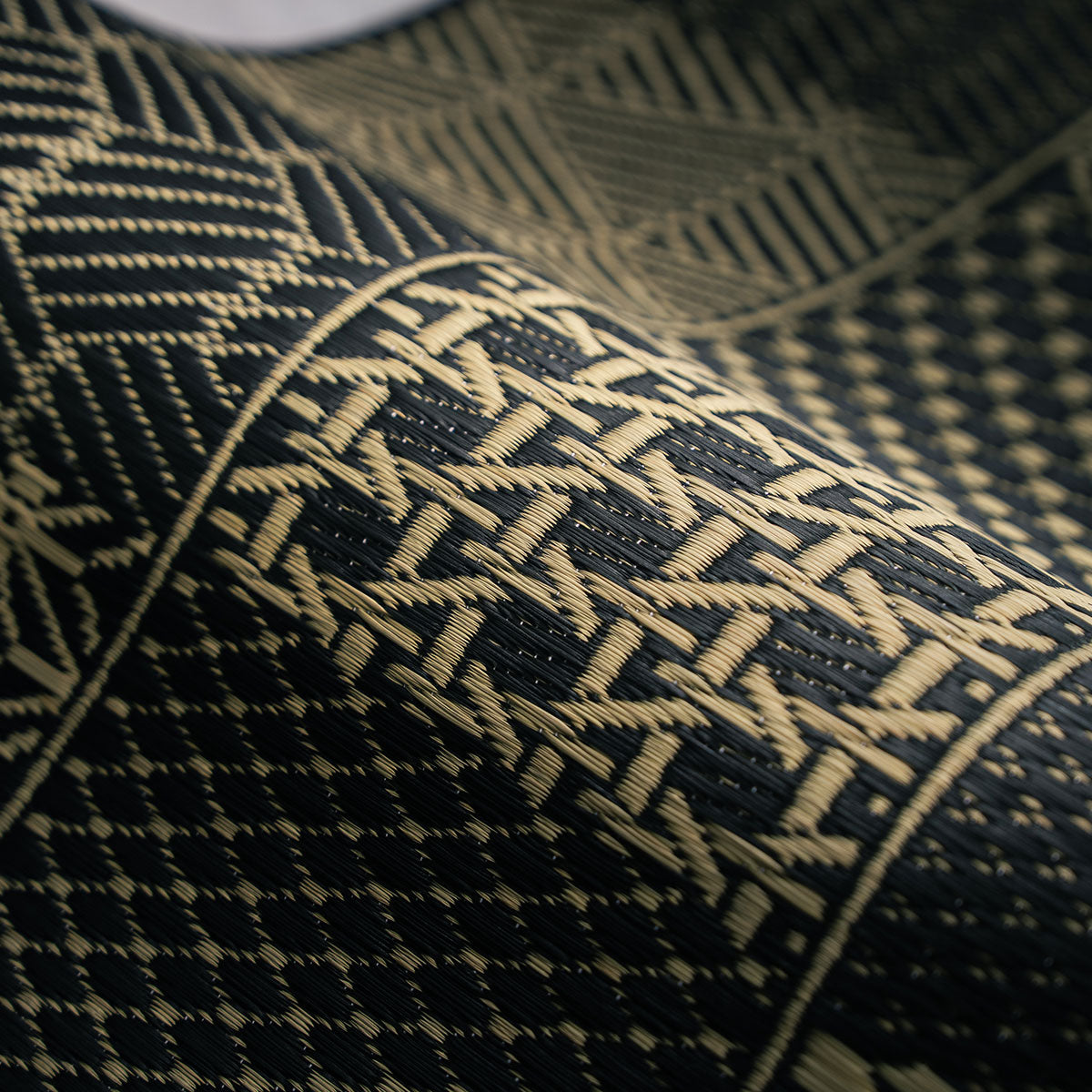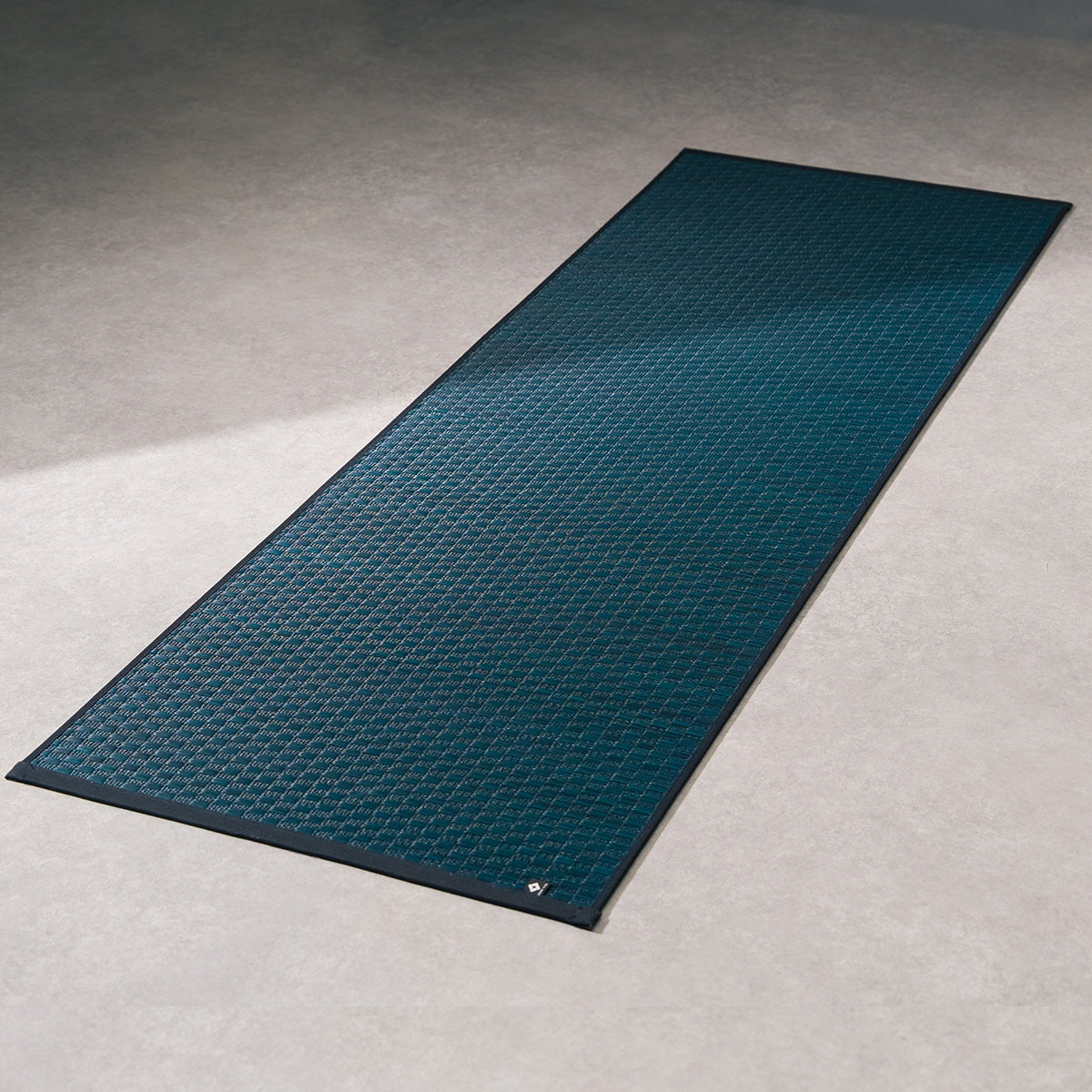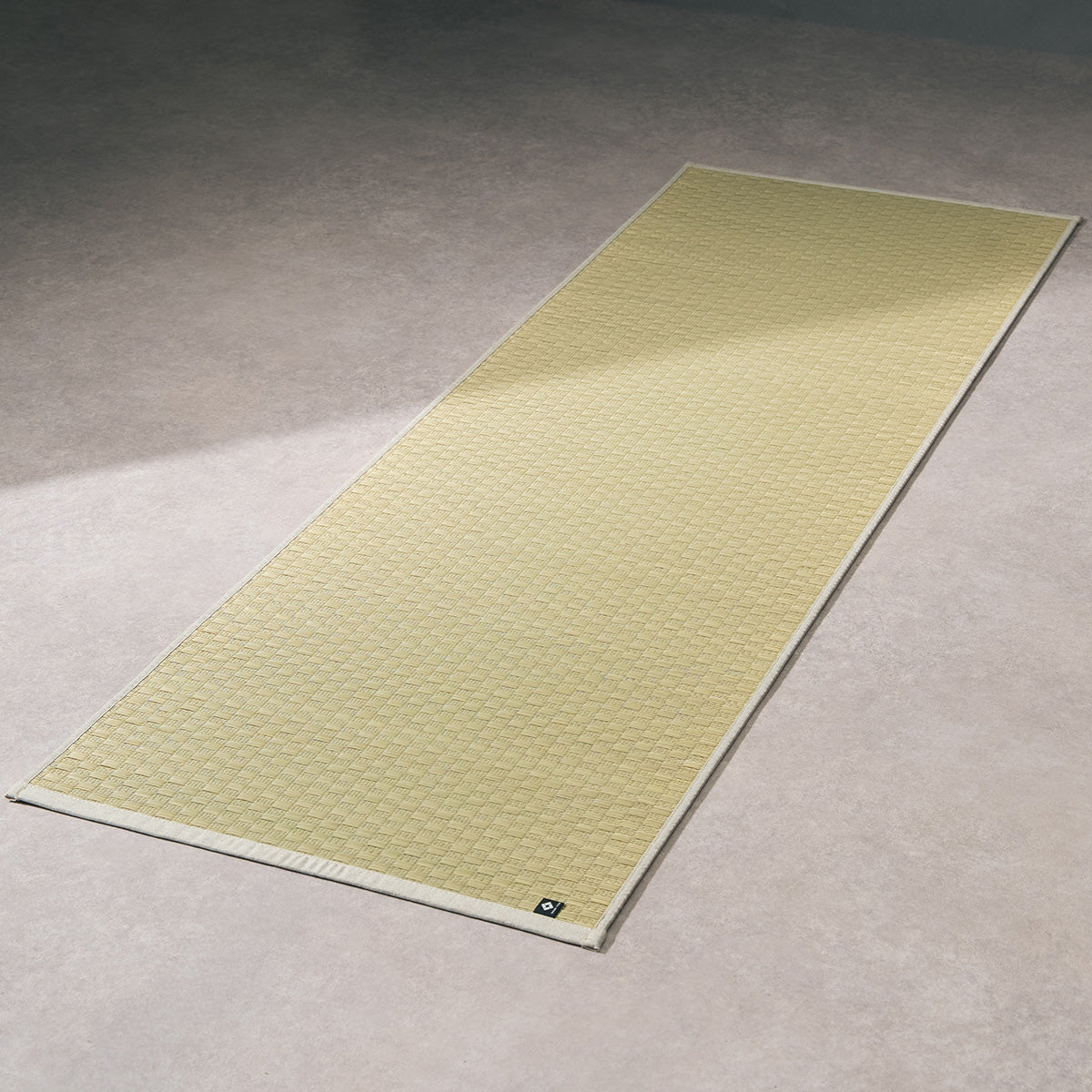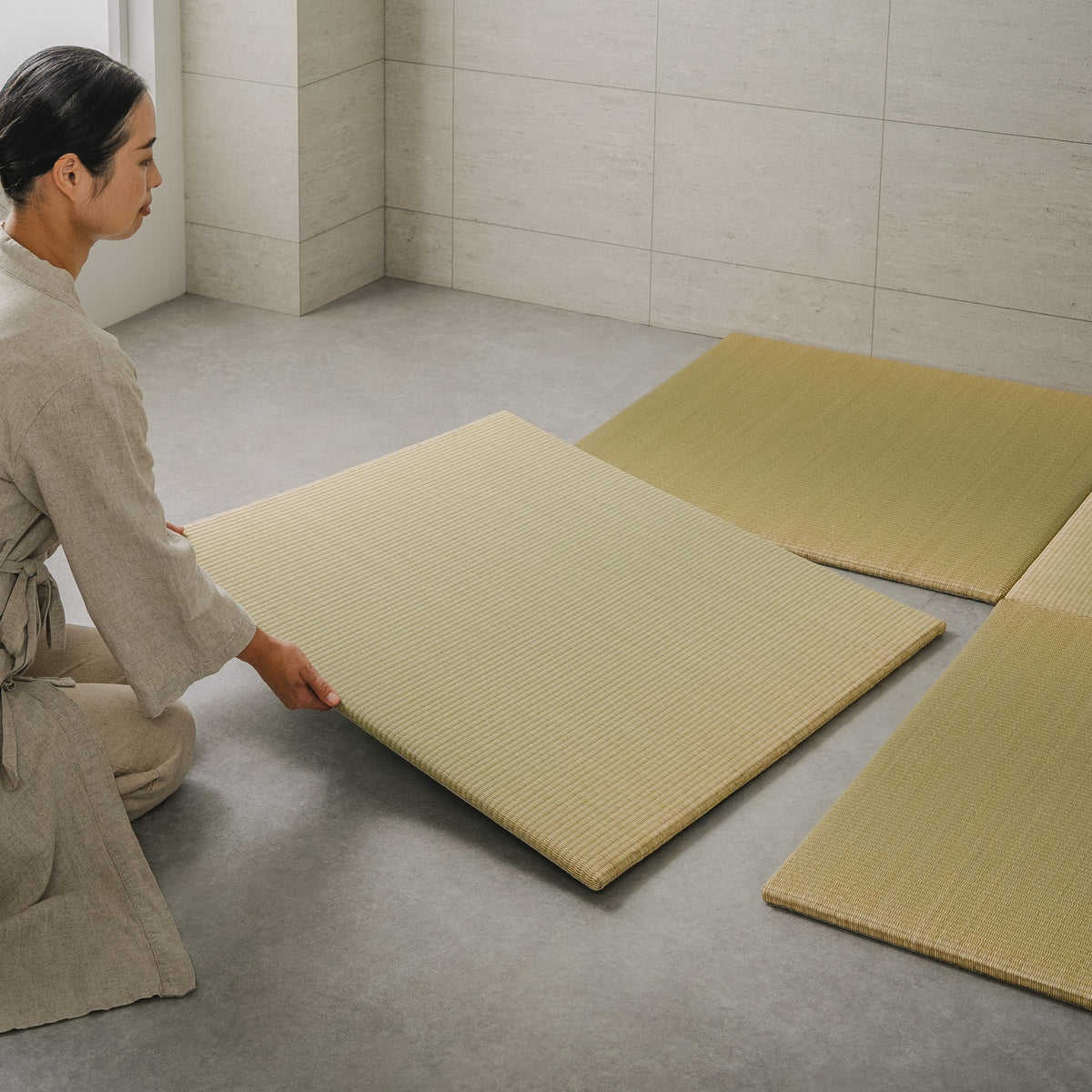



Discover Igusa
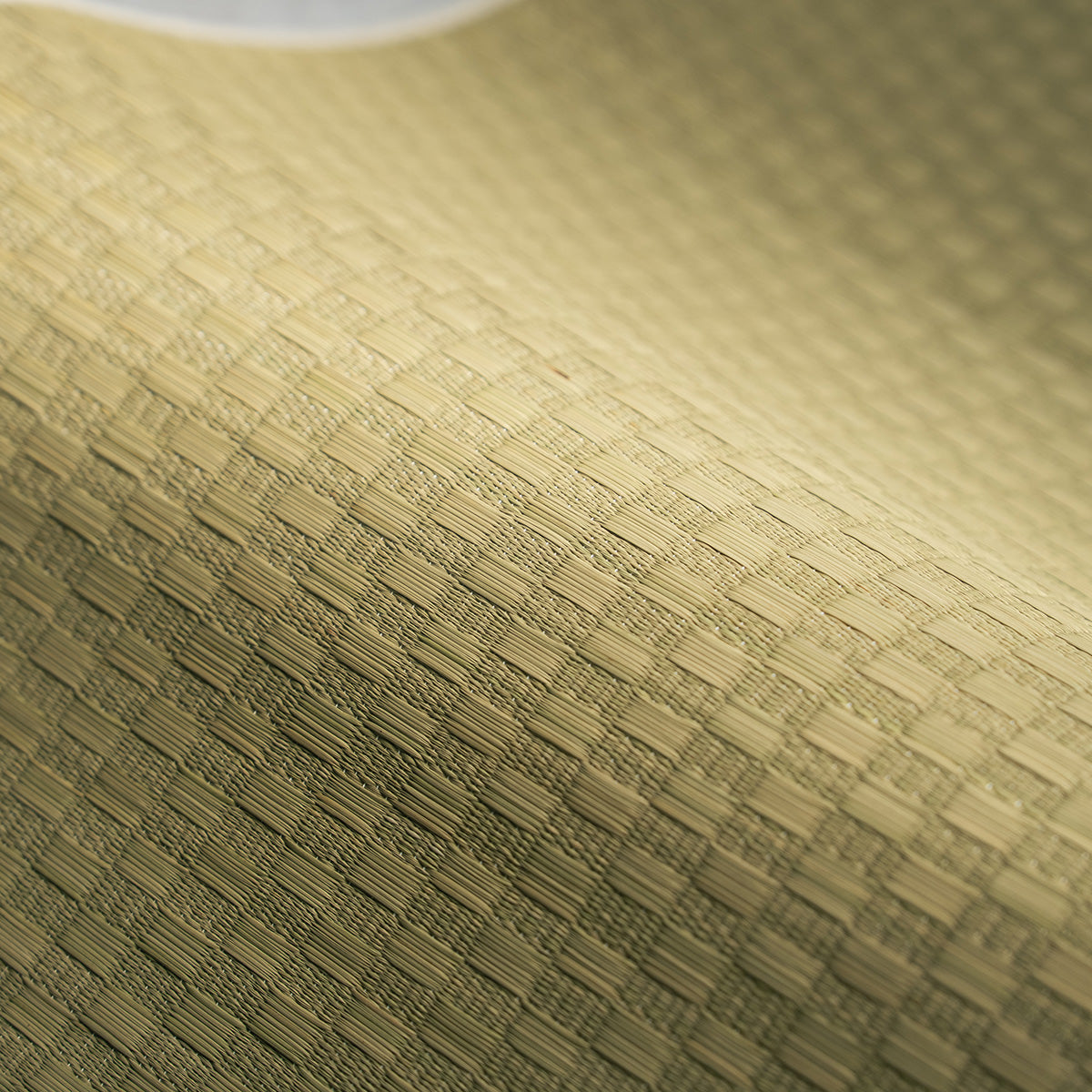
Igusa is a natural material that grows in clean, flowing water and a mild climate. In Japan it has long stood at the center of daily life as the raw material for tatami. Compared with igusa grown overseas, Ikehiko's domestic igusa is denser, with greater resilience and durability — a material made possible by the land of Kyushu, the finest in Japan.
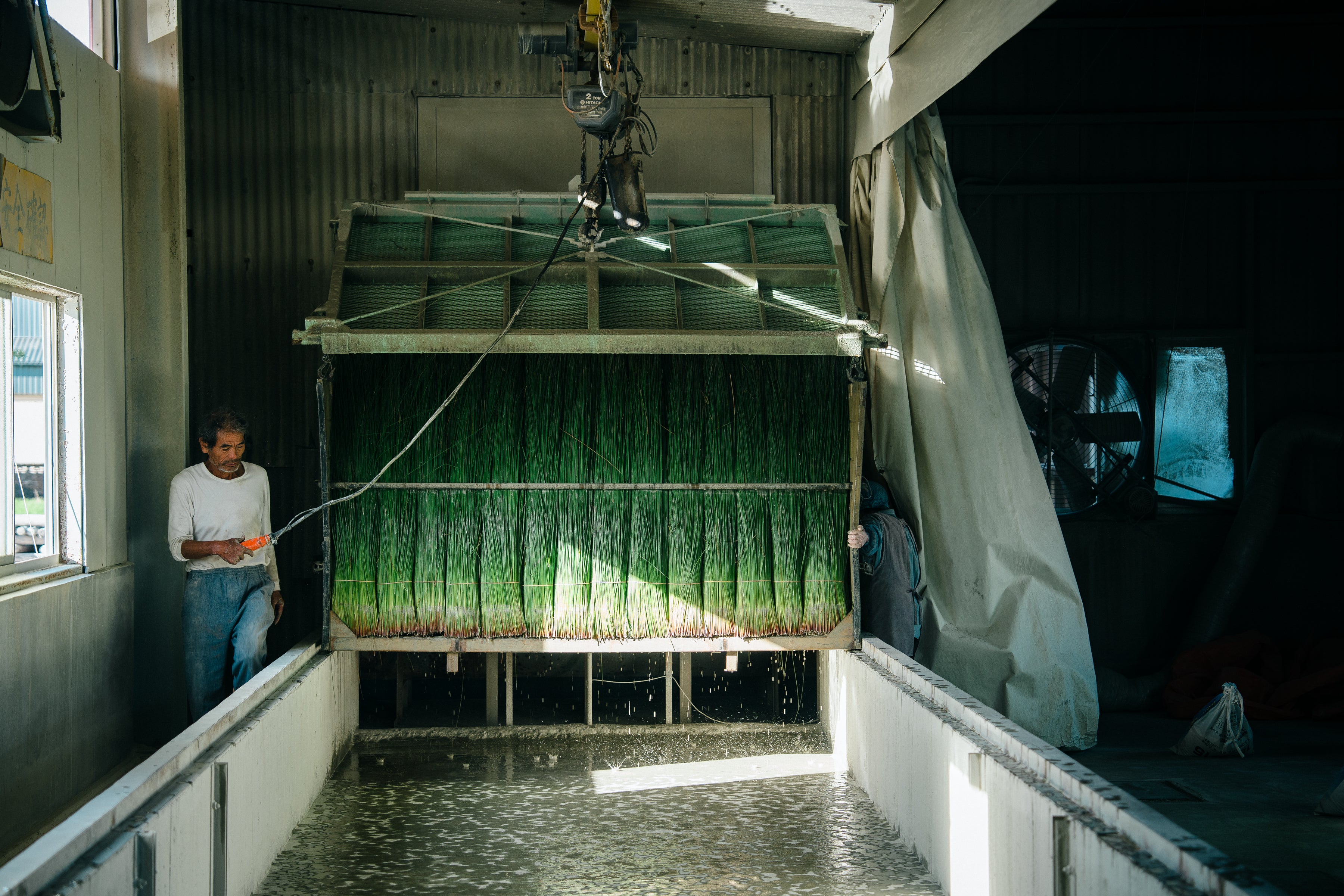
What Makes Ikehiko's Igusa Special
Ikehiko uses carefully selected domestic igusa: rush grown in Kumamoto Prefecture, and rush our own staff grow themselves, both chosen by hand by our artisans.
The clean, flowing water and mild climate of Kyushu give it a density, resilience, and durability that have long been valued in Japan.
The Natural Power of Igusa
💧 Humidity Control
Igusa absorbs excess moisture from the air like a sponge, reducing that sticky feeling on rainy days, then releases moisture back when the air turns dry. It keeps rooms comfortable and helps prevent mold growth.
🌿 Air Adsorption
The sponge-like structure of igusa fibers helps adsorb airborne substances such as nitrogen dioxide and formaldehyde.
🍃 Odor Elimination
Sweat, pet odors, cigarette smoke — the weave of igusa fibers absorbs and breaks down unpleasant odors, with the effect lasting even after 20 years of use.
🌲 Forest Bathing Effect
A fragrance containing phytoncide and vanillin brings the deep relaxation of being in a forest, helping reduce stress and improve sleep quality.
✨ Stain Resistance
The natural oils carried within igusa fibers smartly repel liquids and stains. Spills wipe away easily and rarely leave a mark if cleaned promptly.
🔥 Flame Resistance
Compared to synthetic fibers, natural igusa has an inherent resistance that prevents fire from catching and spreading rapidly, offering a safer living environment.
📢 Sound Absorption
The sponge-like fibers of igusa absorb sound, providing a noise-reducing effect — ideal for households with children or pets.
🦠 Antibacterial Effect
Igusa suppresses bacterial growth. Compared to cotton fabric, it significantly inhibits the growth of Staphylococcus aureus, helping maintain a clean environment.
The Power of Igusa, Proven in Numbers
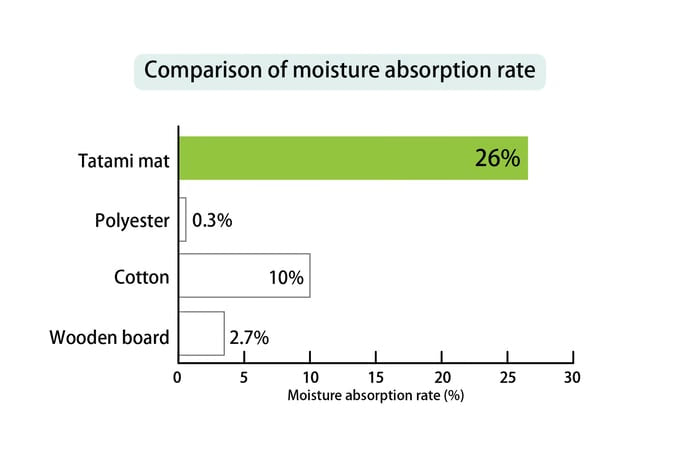
Humidity Control
Igusa has a remarkable ability to absorb moisture — in testing, about 2.5 times that of cotton — yet stays dry to the touch. This comes from the structure of the rush itself: porous, it stores moisture inside and releases it to help balance a room's humidity. Tests show that six tatami mats can hold up to about 1.8 liters (about 0.5 gal) of moisture, taking it in and releasing it as the room's humidity changes.
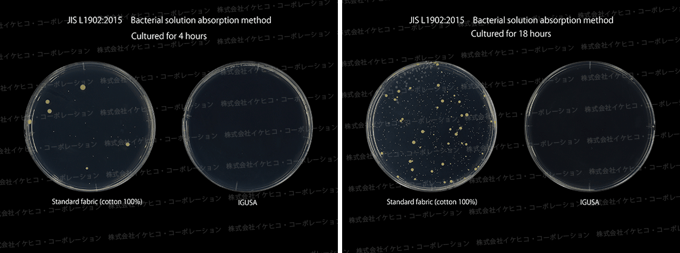
Antibacterial Effect
This points to igusa's strong antibacterial effect. When Staphylococcus aureus was applied to cloth and cultured after 4 and 18 hours, the bacteria gradually multiplied on the cloth, while on the igusa dish it looked almost as if the bacteria had only just been added. S. aureus is a common bacterium, but in large numbers it can cause infection and bad odors.
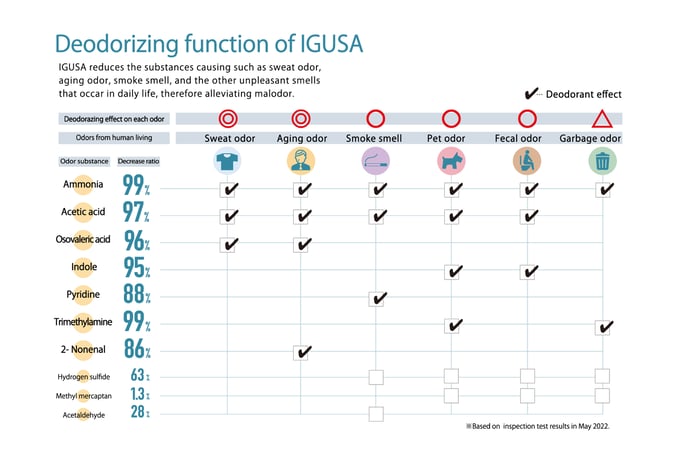
Odor Control
Igusa absorbs odors themselves. The sharp smell of sweat, the odor of age, pet odors, cigarettes — these unpleasant smells come from compounds such as ammonia, acetic acid, and isovaleric acid. The fibers of igusa draw in these odor compounds and help keep the air clean. Without relying on chemicals, it controls odors through the power of the material itself — so it stays pleasant to live with for a long time.
Igusa, Grown by the Land of Kyushu
Igusa cannot be grown from seed.
It begins as a seedling, raised by hand over time — patiently, carefully, by our craftsmen.
This is not mass production. It is a craft.
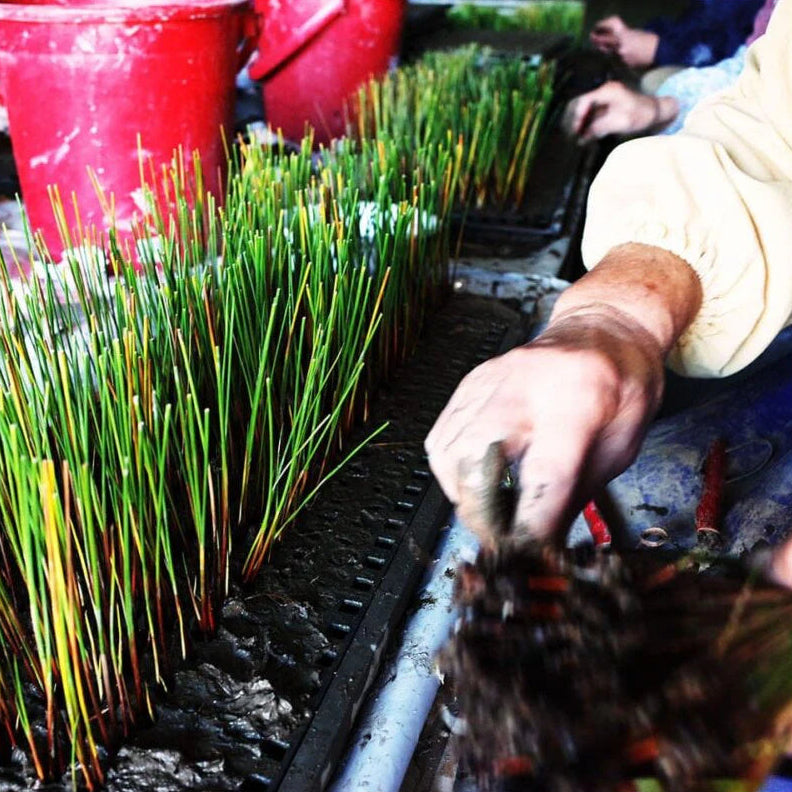
#1 Seedling Growth & Division
Timing: May–Autumn, two years before harvest
Through summer, igusa seedlings grow in rich soil. Come autumn, our craftsmen carefully lift each root and divide the grown stalks — a delicate task called kabuwake that requires a practiced hand to keep every seedling even.
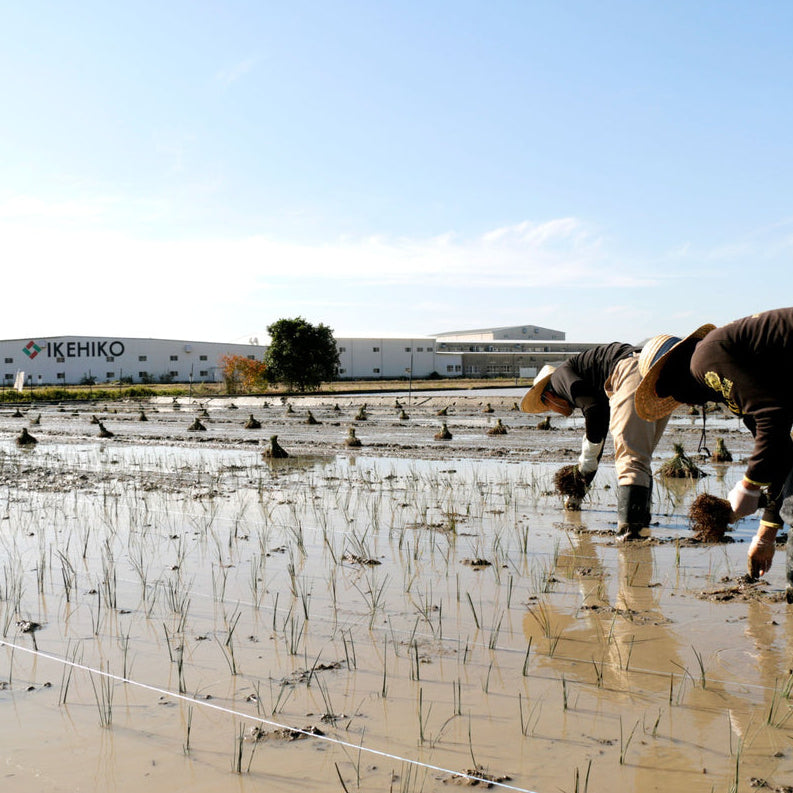
#2 Planting
Timing: Late November–Early December
As winter arrives, seedlings are planted by hand in flooded paddies, spaced evenly just as with rice. Here begins a seven-month journey to harvest.
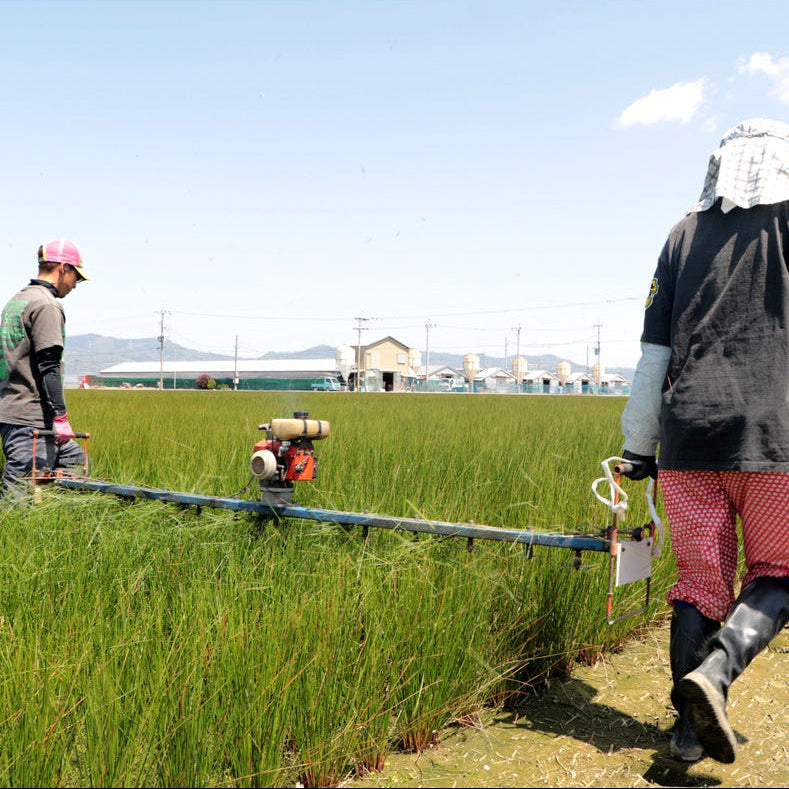
#3 Early Trimming
Timing: Late April–Early May (65–70 days before harvest)
Spring brings rapid growth, as new shoots rise from every stalk. To keep sunlight reaching the shorter ones below, the tallest stems are trimmed back — a careful balance kept across the whole paddy.
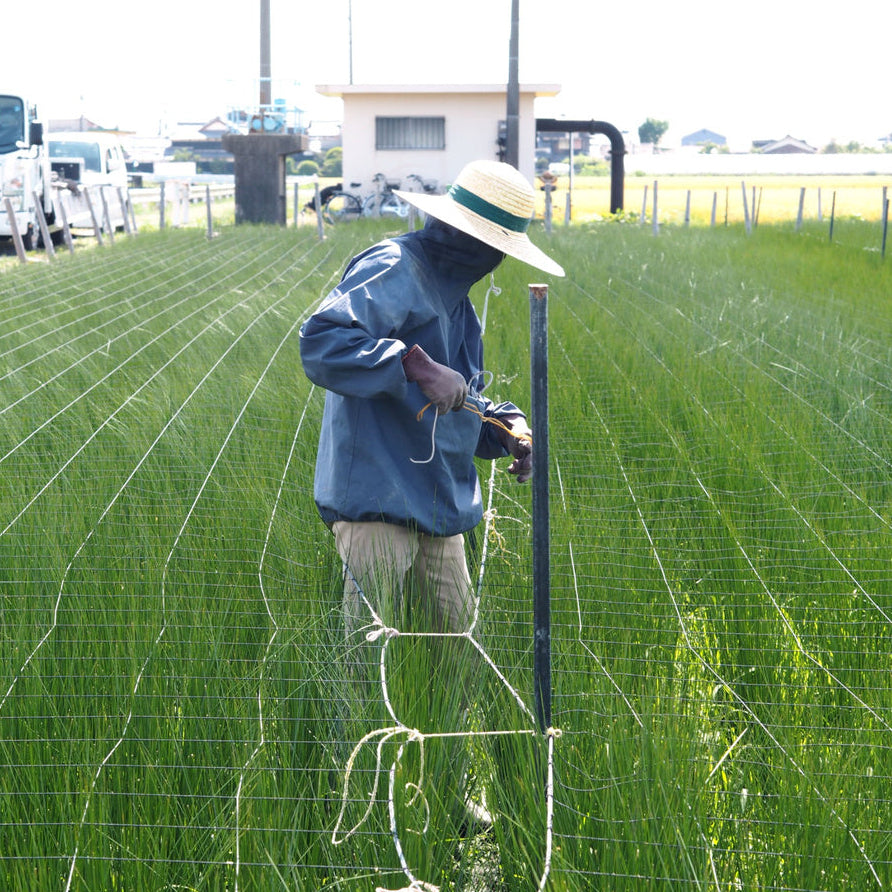
#4 Netting
Timing: Mid–Late May
Nets are raised above the igusa to hold it upright through the rainy season, when stalks reach waist height. As the plants keep growing, the nets are raised with them, guarding against wind and rain.
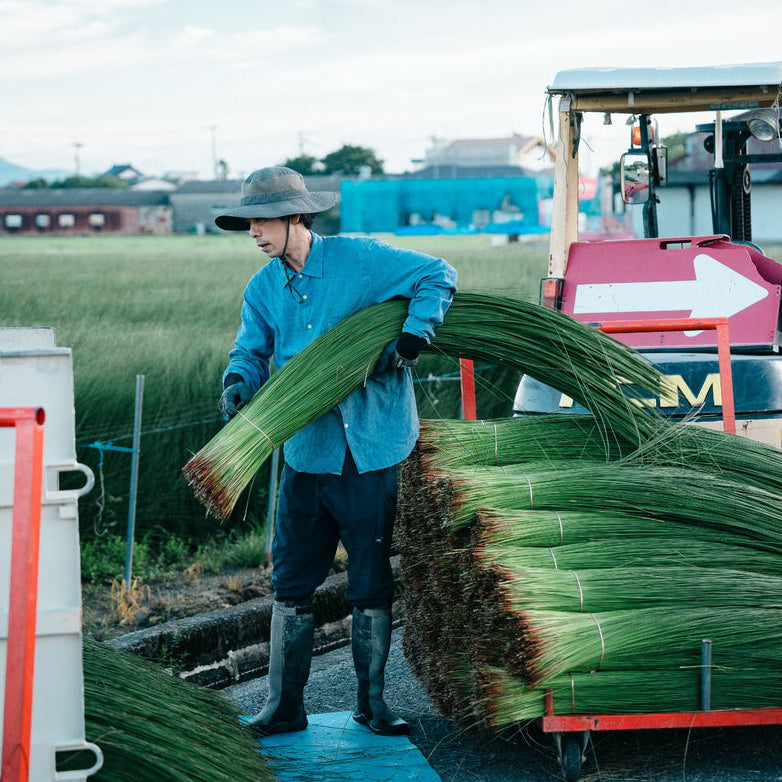
#5 Harvest
Timing: Late June–Mid July
Once igusa reaches 140–150cm, harvest begins at dawn, before the summer heat can damage the stalks. Cut quickly and carefully — sometimes with a light misting of water — then bundled for the next stage.
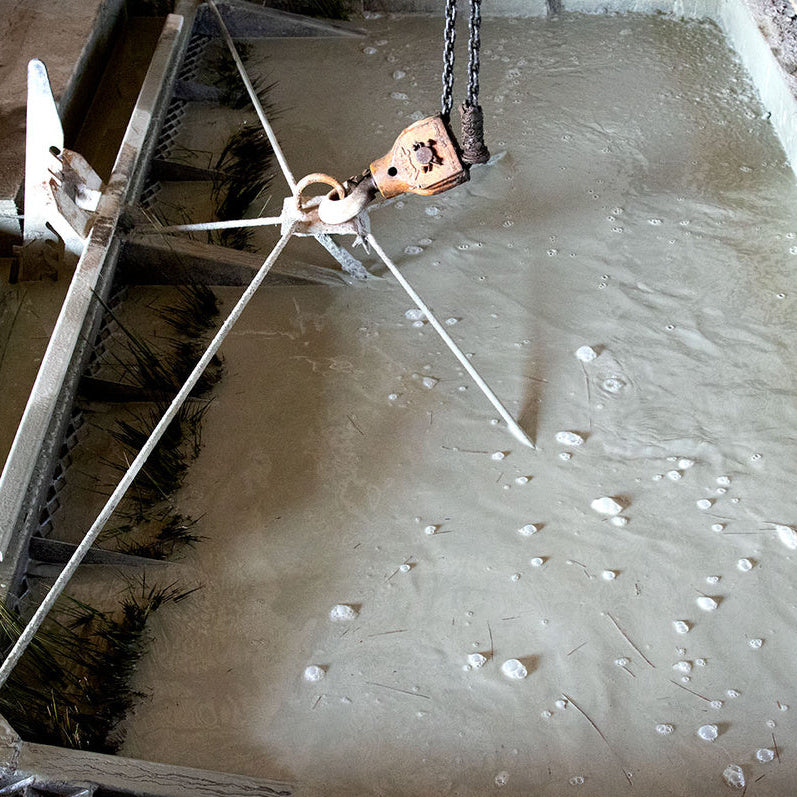
#6 Mud-Dyeing(Dorozome)
Timing: Immediately after harvest
Freshly cut igusa is dipped in water blended with natural dyeing clay — no chemical dyes, ever. Like a fine layer of foundation on skin, the clay softens the green to a muted, even tone.
This step protects the color from fading, preserves the igusa naturally, and evens out shade across every stalk — using nothing but water and earth.
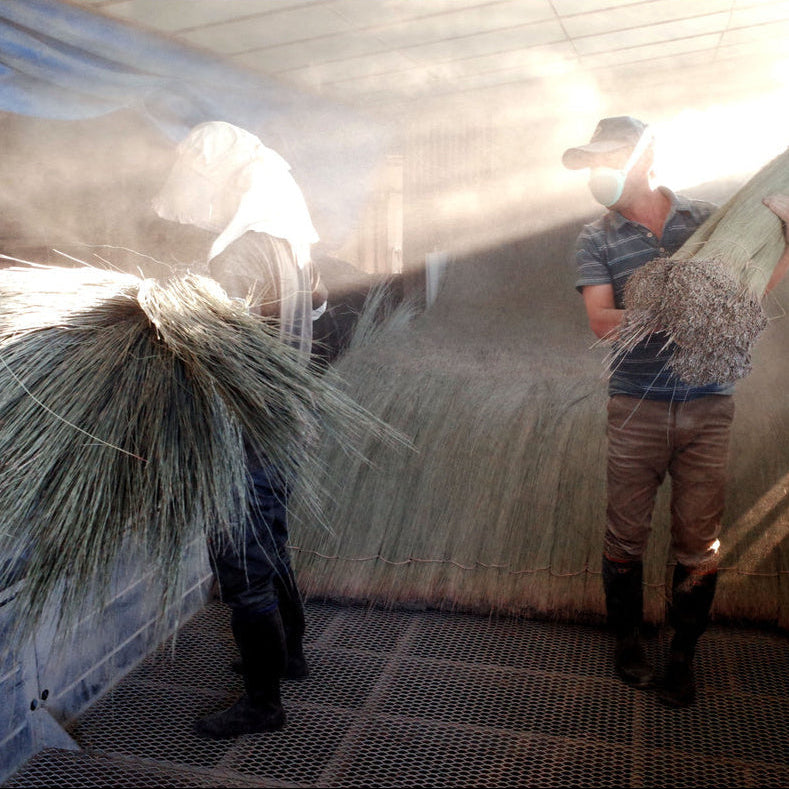
#7 Drying & Sorting
Timing: After mud-dyeing
Dried fully, then sorted by length in roughly 6cm increments. Longer strands mean greater strength and value — a judgment made by skilled hands, bundle by bundle, deciding which igusa becomes which piece.
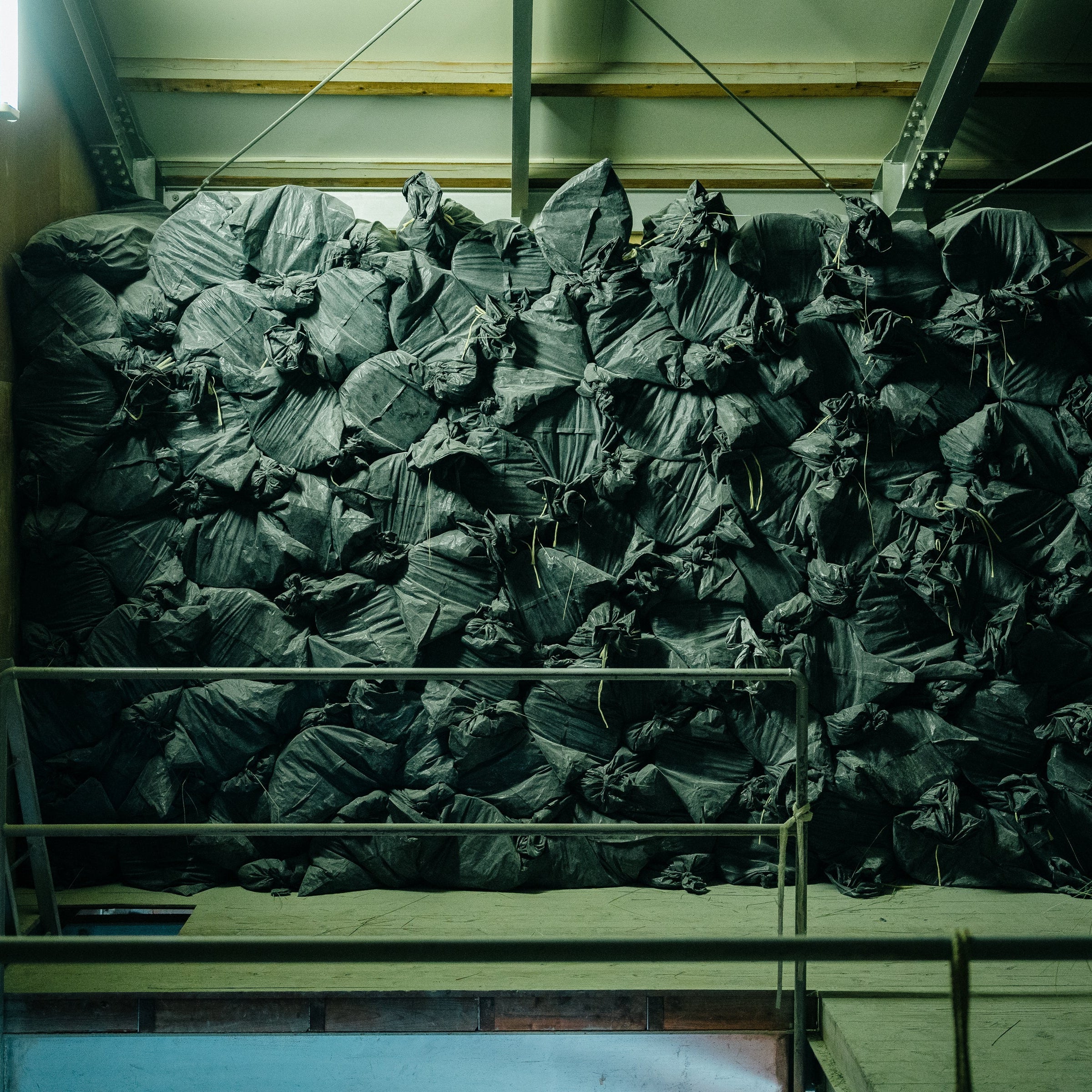
#8 Storage
Timing: After sorting
Sorted igusa is kept in black bags, shielded from sunlight to prevent discoloration, until it reaches our weavers and dyers.
Two years of care, from seedling to storage — this is what shapes the quality of every IKEHIKO igusa.
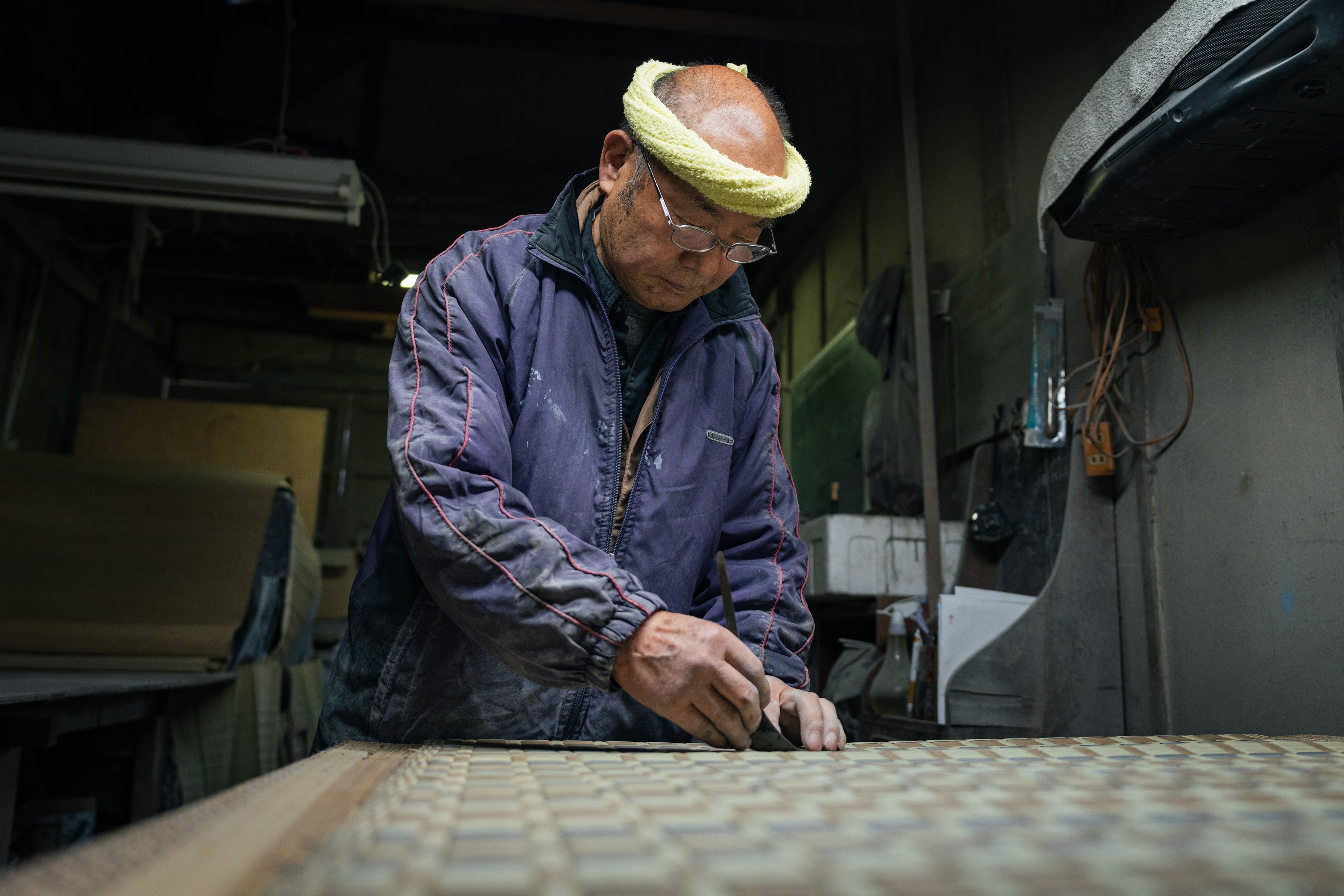
And now, into the hands of the craftsman.
From seedling to storage —
it is this long stretch of time and care that shapes the quality of Ikehiko's igusa.
Tatami Mat Collection